Yes, AI is Changing Education. Maybe That’s a Good Thing
What is the purpose of education if it is not merely the acquisition of knowledge and the demonstration of knowledge retention through examinations? Do we still value learning simply for the sake of it? Can we actually afford for education to simply be about the transformation of the mind?
First, resist the panic
For the last three years, the world has been engaged in an endless frenzied debate about what Artificial Intelligence will do to human intelligence and how it will change the education industrial complex. As with every other disruptive force that has landed on our shores, we have succumbed to the familiar emotional reaction of fear. Fear of obsolescence, fear of cheating, fear of a generation that outsources its thinking to machines, fear that the things we have built - our schools, our curricula, our pedagogies - will be swept away by a technological tide we cannot control.
We must resist that temptation. The risks of AI are very real and they are being documented as we learn about them - the massive draw on environmental resources, the uncontrollable spread of misinformation, the unregulated landscape of knowledge distortion causing real loss of lives and much more. However, fear is the worst possible starting point for a conversation that demands our clearest thinking and our most courageous imagination. The arrival of AI in our education systems is forcing a much more powerful conversation than we’ve had about education this century. It all comes down to this: we need a fundamental shift in how we conceive the purpose of education itself.
Everything else follows from that: how we invest in teachers, how we design learning experiences, how we measure success, how we welcome or resist technology and much more. All of it is downstream of purpose. Right now, in too many of the world's educational systems, the implicit purpose of education is content delivery - transmitting information from teacher to student - and success is measured by how efficiently that transmission happens and how well students can reproduce it on demand.
We are often reminded that our current dominant education system, the “factory model of education” was designed in the 19th century during the Industrial Revolution to standardize learning. The outcome of this educational model is to maintain a pipeline of reliable, economically viable resources (people) who can make a swift transition from learning into production: learn from the ages of 4-22 (this could end at 16 or 18 if high school is seen as a sufficient drop-off point), work until somewhere between the ages of 60 and 70, and then retire when energy wanes. This system conceives of the purpose of life as work, and the role of education as preparation for varying levels of work.
That model was already struggling before AI arrived. Now, it is clearly unsustainable. When it comes to content transmission, knowledge reproduction and all kinds of work, we are competing with systems that never sleep, never tire and never have to navigate a difficult family situation before walking into a classroom or the office. If our role in education is to deliver knowledge, we will always be slower and less efficient than AI. Therefore, we need to retire that concept entirely and urgently.
The purpose of education, as I see it, is more ambitious and more human: to enable discovery, to spark imagination, to transform minds, and to build communities of people whose individual and collective contributions would leave our societies, our nations, and our planet in a better state than they found them.
That is not a task that AI alone can perform on our behalf.
What must never change in education
There is a lot that AI can do for education and these are already being documented widely - from supporting teachers with content planning, to enabling personalised learning for students and much more. Yet, we must not rush into overhauling our current learning systems as part of the bandwagon of new technology adoption. Before we talk about what needs to change in education, we have to be honest about what must not, because in the rush to adapt, there is a real risk that we sacrifice the things that make education genuinely powerful.
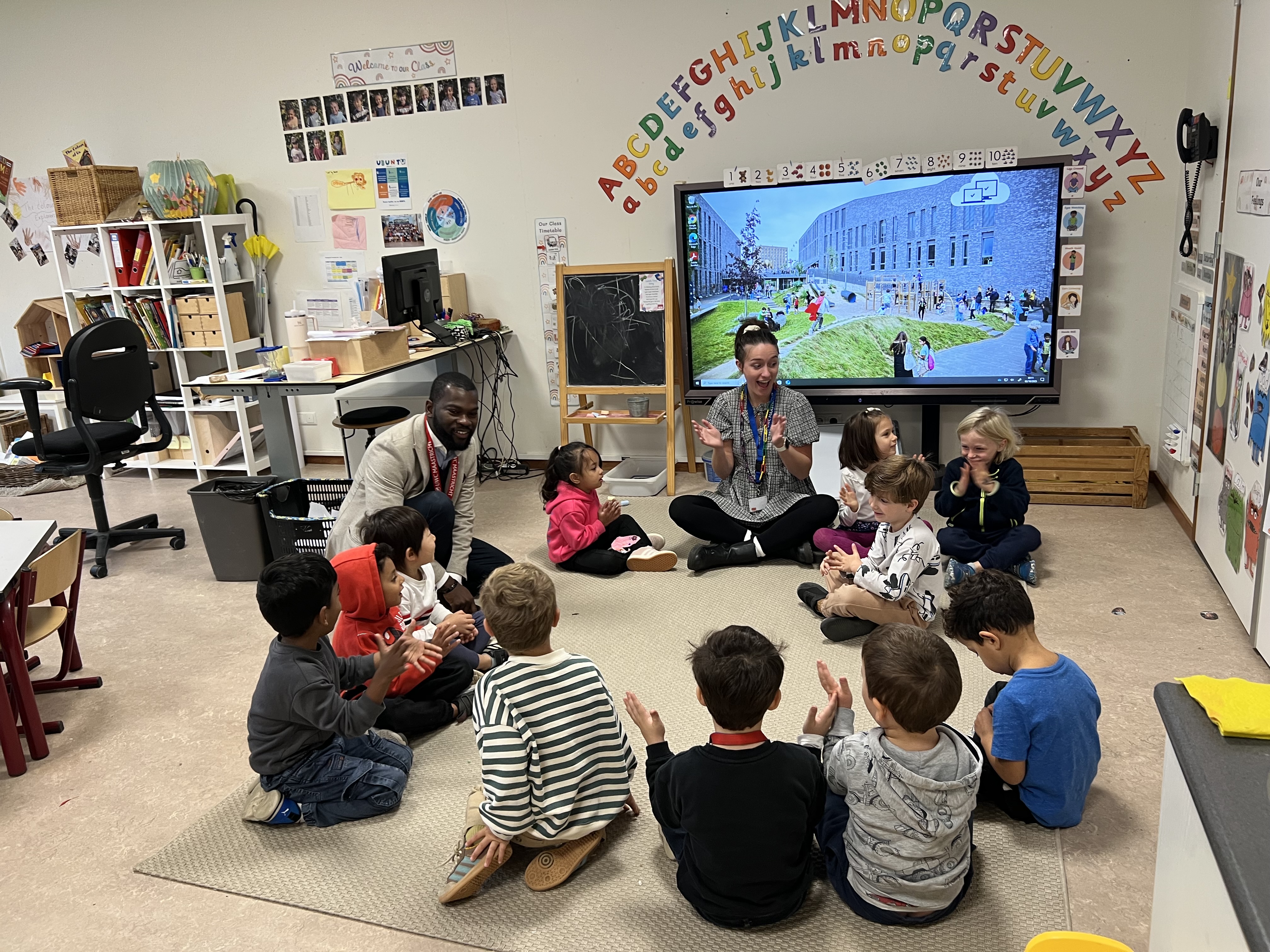
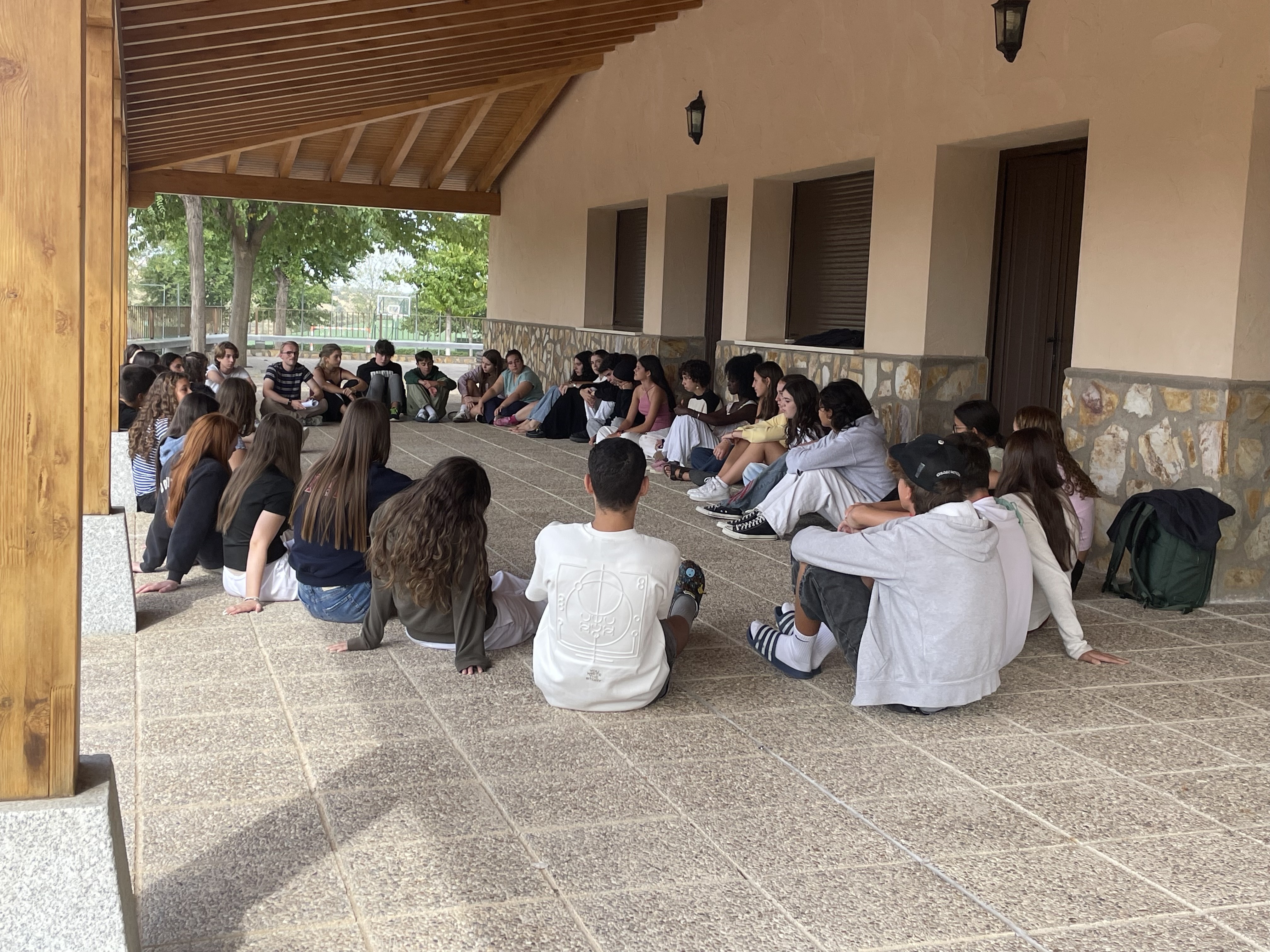
The first is deliberate diversity. When education does its best work, it brings together people who are profoundly different - in background, in language, in belief, in experience - and asks them to learn from each other, to be challenged by each other, to grow in relationship with each other and to create things together. AI might be able to process information about diversity but it cannot replicate the emergence that happens when a young person sits across the room from someone whose entire worldview challenges their own. That requires physical presence, eye contact, and the discomfort of real conversations. We must protect genuine human encounters.
The second is intentional community. AI is extraordinarily good at helping individuals learn in isolation. With generative AI tools, we can now afford to ignore the real people who are close to us and get answers to our deepest questions from a mobile device. There is real risk to this. AI can personalise content, it can pace itself to each learner and provide instant feedback, but human beings do not learn best in isolation - we learn best through relationships. The challenge before us is almost to resist the individualising pull of AI and insist on building spaces where young people learn together, solve problems together, develop a sense of collective responsibility together. We must promote the value of shared wisdom that is only attainable when we spend real time with each other. The goal of our learning must be cooperation, not just competence.
The third is experiential learning. We know from everything we have come to understand about cognition and retention that people learn best by doing - by trying, failing, reflecting, and trying again. AI, at its current best, offers quick solutions and shortcut answers (even confidently presenting false information as fact). What AI produces can be enormously useful sometimes, but it can also be a kind of educational junk food: immediately satisfying, yet ultimately nourishing very little. We must double down on creating opportunities for young people to engage with the world in all its complexity and difficulty, not just to receive its processed outputs.
What we must rethink in education
With these foundations in place, we must now focus on what must fundamentally change in order for education to deliver on its core purpose.
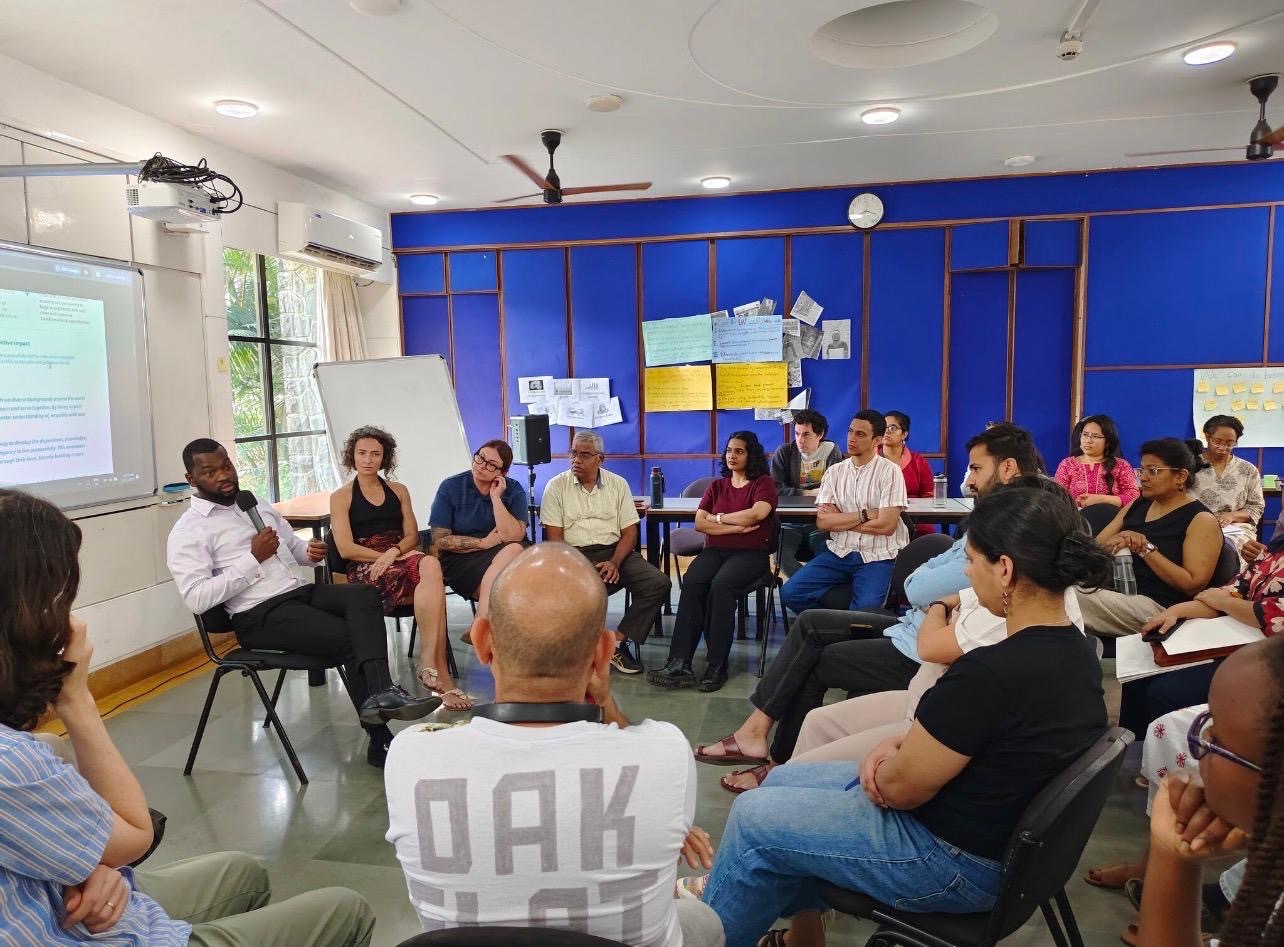
First: our conception of teachers and our investment in them. Teachers are the most critical enablers of curiosity in any educational system. Several studies have affirmed that teachers are more significant than any other determinant of a young person’s experiences of learning as joy or as dread. They are the most visible role models that young people have, therefore their ability to be their best selves - to bring enthusiasm, genuine care, and intellectual rigour into a classroom - will do more to shape a generation than any AI tool ever could.
Yet, we systematically underinvest in them. We undertrain, undercompensate, and overburden them. We talk about the future of AI in education in ways that implicitly position teachers as an outdated delivery mechanism rather than as the irreplaceable human heart of the whole enterprise. In 2025, UNESCO launched a campaign called “Teachers cannot be coded”. It is impossible to disagree with this, yet the evidence suggests that we haven’t quite figured out how to properly elevate the role of teachers.
We tried replacing teachers with technology during the worst of the COVID-19 pandemic. It did not work. It will not work. The question is not whether teachers matter but whether we are willing to do the hard work of preparing them for a world that is evolving faster than most professional development programmes can keep up with. Teacher wellbeing, compensation, qualification, and workload are the central challenges of education in the age of AI.
Second: we must move from standardisation to differentiation. The logic of standardisation made a kind of industrial sense when education was primarily about content delivery at scale. In a classroom of 30 students, we can teach the same curriculum and evaluate all students in the same way, but we know that this is not how human beings actually develop. We come from different places, with different levels of preparation, different ways of thinking and different timelines for growth. To design optimally for this reality will be a fundamental challenge for our generation.
Let us take a lesson from our natural environment. In nature, monocultures are the most fragile systems. A thriving ecosystem is heterogeneous - multiple species, multiple relationships, multiple modes of coexistence. Our educational systems have been designed as monocultures, and they carry all the fragility that this implies. When used thoughtfully, AI offers us a genuine opportunity to build in differentiation: to allow young people to move at their own pace, to meet them where they are, and to honour the diversity of their starting points rather than pretending it doesn't exist. However, this will require us to give up some deeply held assumptions about what fairness in education means. Does it actually make sense to divide students up by grade level? Do we need to teach subjects as distinct disciplines? Do we need to assess understanding only at the end of a learning cycle? Does everyone need a summative assessment? So many questions, so few tested options.
Third: we must move from competition to cooperation as the metric of success. Most educational systems are currently designed around competition. Someone comes first and someone comes last. Students are ranked, schools are ranked, universities are ranked, even employers are ranked. The implicit message is that success means outperforming someone else. This is both philosophically troubling and ecologically irrational. Nature sustains life through symbiosis, not just hierarchy. When young people leave our schools and transition into civic life, their capacity for collective problem solving will matter more than their ability to outperform others. We have to design educational systems that reward collective engagement, shared problem-solving, and the capacity to cooperate across differences. That is the most practical thing we can do to prepare young people for the actual challenges ahead.
How AI can influence education’s evolution
When it comes to AI in education specifically, we must learn to embrace the curiosity of toddlers and balance that with the wisdom of elders. The entire conversation about AI is already shaped by anxiety - concerns about academic integrity, about job displacement, about cognitive atrophy and much else. Even though this is fast becoming a failing argument (because it is being said that AI is possibly the most disruptive technology ever), it is still true that we have been through massive technological disruption before: the advent of the clock changed the way we tell time; the calculator reduced the pressure on mental arithmetic; and the GPS completely altered our approach to navigation. In each case, it can be argued that we lost something, yet we also gained the cognitive space to develop something else. The question is not whether AI will change what we are capable of - it certainly will - but whether we are intentional enough to decide what we gain from that change.
One of the common criticisms of AI today is that it offers shortcuts to learning that could potentially diminish cognitive abilities. This is fair. From a human point of view, using AI to find answers faster is valid, just as using a computer is smarter than using a typewriter. Both could work, but one is more efficient than the other. The human brain is wired to seek shortcuts and heuristics, and there is nothing wrong with that. But if we conceive of AI’s role in education solely in terms of efficiency - getting the answer faster, covering more content, saving time - we will produce a generation that is efficient but hollow. Knowing this, the deeper question is what happens to the intelligences we exercise less. Inevitably, muscles we don't use will weaken over time.
Therefore, we must reframe the introduction of AI in education as an invitation to re-stimulate curiosity. In his famous 2006 TED talk, titled “Do schools kill creativity?”, Sir Ken Robinson stressed that “curiosity is the engine of intellectual achievement. He went further to lament that “we are educating people out of their creative capacities”. Can we help young people reclaim some of this curiosity with the help of AI?
I have a seven-year-old daughter. When we walk in the park near our home and she sees a flower or a small fruit that neither she nor I recognise, she asks: "Can we use Google Lens to find out what it is?" In that moment, something remarkable happens: we take a picture, the AI tool searches its vast database and aggregates the most likely answer, and the information appears on a screen in a matter of microseconds. The joy that emerges on her face is not the joy of having been told something, it is the joy of discovery - of asking a question and finding an answer in real time, in the real world, about something real. That is what AI can do at a scale no human can match.
AI does not have to replace curiosity, it can activate it. I once watched a man at lunch photograph his meal and upload it to ChatGPT and then type one word: "nutrition". In seconds, he was learning about the caloric composition of every ingredient on his plate, thinking about what to eat for the rest of the day, and engaging with his own body and health choices in a way he never had the option to do before. There was joy in it.
What else can AI do for young people in our care if we approach it with a bit more natural curiosity ourselves?
It is now clear that AI is here to stay and it will only become more powerful, more pervasive, and more capable of doing things that once required exclusive human intelligence. Yet, every human being has inherent, irreducible value. AI can scale access to information and it can scale productivity, but it cannot scale human dignity. Only humans can create that - by choosing to see each other, to build for each other, and to resist the forces that would pull us further into ourselves and further apart from each other. It is on us to protect this.