{ Case Study III · 2021 – 2024 }
Developing the
UWC 2030 Strategy
Developing Ideas, Building Institutions, Leading People
- Period
- 2021 – 2024
- Institution
- United World Colleges International, London
- Role
- Executive Director, UWC International
“Strategy is a game of choices. If everything is a priority, then nothing is a priority.”
I.The Challenge and the Opportunity
When I joined The United World Colleges (UWC) International in 2021, I was stepping into one of the most fascinating leadership environments I had ever encountered.
UWC is a global education movement founded in 1962 with a single, powerful mission: to make education a force to unite people, nations, and cultures for peace and a sustainable future. In practice, it is a confederation of 175 organisations: 18 international schools operating across 20 campuses, and approximately 157 national committees operating in diverse countries and territories around the world. It is, by any measure, an intricate (or complex) system. It is a system of tremendous interdependencies, each part shaped by its own history, culture, leadership, and context, and all in pursuit of a single mission.
The world I was entering, however, was not in a good place. The COVID-19 pandemic had disrupted everything. The murder of George Floyd in the USA had ignited the Black Lives Matter movement and forced institutions everywhere, including UWC, to confront questions of race, identity, and institutional accountability that they had long deferred. Equally, the mental health crisis among young people had arrived as a governing reality in every school on the planet, and UWC was no exception. At the same time, a review of UWC's governance structure had just delivered a set of restructuring recommendations. The UWC International Office, which was my primary responsibility, had also been subject to a hiring freeze for months so staffing was thin. It all fell to me to make it work.
Beyond these immediate pressures, UWC was confronting deeper structural questions that had been building for years. Six new schools had joined the movement between 2009 and 2019 - in the Netherlands, Germany, Armenia, China, Japan, Thailand and Tanzania - and the wave of growth was beginning to create fragility. Concerns were mounting about whether new schools were drawing resources away from established ones. The Global Selection Programme, created to attract full fee-paying students to support schools' financial sustainability, had generated significant conflict with the National Committee system, which felt that the movement had created a preferential route into UWC for wealthy families. The movement had always been described as "the world’s best-kept secret", a phrase that might have been intended as a compliment but which I experienced as damaging. After 60 years, UWC's brand was nearly invisible to the world it was trying to influence.
Most pressingly, there was the question of impact. A five-year longitudinal study, led by researchers at Harvard's Graduate School of Education, had recently been completed. The study surveyed just under 12,000 UWC alumni and students, to understand the difference a UWC education makes. The findings were genuinely illuminating: UWC alumni overwhelmingly credited their education with shaping their values, developing their intercultural understanding, and forming their global perspective. But the study also raised hard questions. The IB curriculum was viewed as overly rigid and insufficiently distinctive. Mental health provision was uneven. Sustainability was described more as a buzzword than a way of life. Students were struggling to fully inhabit the UWC experience while pursuing high academic outcomes in parallel. Allegations of intolerance within some communities were recorded. The study was great for UWC in terms of what it confirmed, but the things it challenged were impossible to ignore.
Then there was the matter of the existing strategy. The UWC 2018 & Beyond strategy, extensively developed over a two-year period had been in place for three years before I arrived. By 2021, it felt, in the minds of most people in the movement, largely overtaken by events. The pressures of the pandemic, the youth mental health crisis, and the questions of racial justice had rendered its framing insufficient. The movement, in the most honest assessment I could make, was in defence mode. It needed to find itself again.
The opportunity, however, was equally real. UWC had a mission that was more relevant than ever. In a world of growing conflict, polarisation, climate crisis, and inequality, the idea of bringing young people together across every divide - national, cultural, religious, socioeconomic - to develop the dispositions and agency to build a more peaceful world was not merely noble. It was urgent. The question was not whether UWC mattered. It was whether UWC could organise itself to matter more — and to communicate that it mattered, to the world it was trying to serve.
My mandate was to lead the movement forward. The vehicle for doing that was a new strategy.
II.The Approach
I have always believed that before you can lead a system forward, you must first understand it from the inside. And before you can develop a strategy, you must first develop a theory: a clear account of how change actually happens, what an organisation uniquely contributes, and what would be lost if it disappeared.
At UWC, that meant I had to do three things simultaneously, and over a sustained period: listen deeply across the movement; synthesise what I heard into a coherent intellectual framework; and make real choices, with real trade-offs, about what the movement would and would not pursue.
Start with diagnosis, not prescription.
My first years were as much about seeking understanding as about simply showing up. I made 27 UWC schools visits over three years, attending board meetings, speaking at graduations, meeting alumni, students, parents, educators, donors, and volunteers at every level. I held countless formal and informal conversations. I was not just consulting; I was listening for the patterns underneath the noise. It was the things people said in every conversation that revealed what the movement truly needed.
Ask better questions.
Early in my tenure, I began to notice that while almost everyone in the UWC movement spoke very passionately about the mission, very few could clearly and succinctly articulate the highest value of a UWC education. We defaulted to long-winded stories about the benefits of scholarships and access for underprivileged students. We spoke about diversity, and we spoke a lot about the International Baccalaureate. I began asking simple, even radical questions: Why do we deserve to exist? What do we do that truly makes a difference? How do we know we are justifying our raison d'être on an ongoing basis? These questions became the intellectual engine of the strategy development process.
Respect the past before defining the future.
One of the instincts I had to resist, and a major issue for many incoming leaders, was the temptation to distance oneself completely from what came before. The previous strategy, UWC 2018 & Beyond, was not a failure. It had produced real results: the establishment and growth of the Global Selection Programme; the creation of the National Committee Fund; the launch of the UWC Hub as a digital community platform; a strengthened commitment to financial transparency; and the commissioning of the Harvard Impact Study. These were real achievements. Any new strategy that did not honour them would have been both historically inaccurate and institutionally alienating.
Make the theory of impact first.
Before any strategic priorities could be defined, I needed to develop a Theory of Impact (some a more comfortable with Theory of Change): a clear, simple, shared account of how UWC actually seeks to change the world. Without that, the strategy would be a list of activities rather than a coherent direction. The Theory of Impact became the intellectual foundation upon which everything else was built.
Understand what you are not going to do.
Strategy is a game of choices. If everything is a priority, nothing is. A significant part of my work was to identify the things that the movement would not pursue, despite the pressure - not because they were unworthy, but because they were not the things UWC was uniquely positioned to do. Establish an online-only UWC school: not yet. Re-enter tertiary education: not now. Emerging technology as a primary focus: not our distinctive contribution. Becoming a direct advocate for government-led education reform: not our lane. Deciding what not to do was as important as deciding what to do.
III.Implementation
The development of the UWC 2030 strategy was a two-year process of research, consultation, synthesis, and co-creation. I am describing it as a sequence, but in practice it was iterative and messy in the way that all serious institutional work is messy.
Research and benchmarking
As I listened intently within UWC circles, I also undertook an extensive programme of external research. I reviewed the previous UWC strategies and mapped the timelines of each. I studied strategies from other leading organisations — the London School of Economics, the International Federation of the Red Cross, the University of Exeter, Amnesty International, HelpAge International, and the African Leadership Academy (including the two strategic plans I had been involved in developing during my time there). I was looking for methodological lessons: how do international federations with diverse, semi-autonomous member organisations create strategic coherence without undermining local agency? What do effective theories of change look like in complex educational movements? I conducted a detailed SWOT analysis of the UWC movement, worked with the UNESCO World in 2030 public survey data which had captured the perspectives of 15,000 people globally, and made sense of the Harvard Impact Study.
Movement-wide consultation
Over the course of eighteen months, I engaged in structured consultation across the entire UWC movement. This included formal workshops with governance members at multiple levels, including all heads of schools and all chairs of boards. Over a six-month period, we organised fortnightly sessions (building up to the UWC International Congress), engaging hundreds of participants across every constituency of the movement: students, alumni, educators, volunteers, donors, national committee leaders, and partners.
The most important insight from this consultation was a clear pattern: what people said they wanted was often a symptom of something deeper. When people asked for a UWC diploma, what they were really asking for was a more distinctive educational identity. When they complained about the Global Selection Programme, what they were really expressing was anxiety about UWC's founding commitment to needs-based access. When they described UWC as " the world’s best-kept secret," what they were really mourning was decades of under-investment in the movement's voice and influence in the world. It was essential to learn to hear what was underneath the stated positions.
The UWC International Congress, Thailand
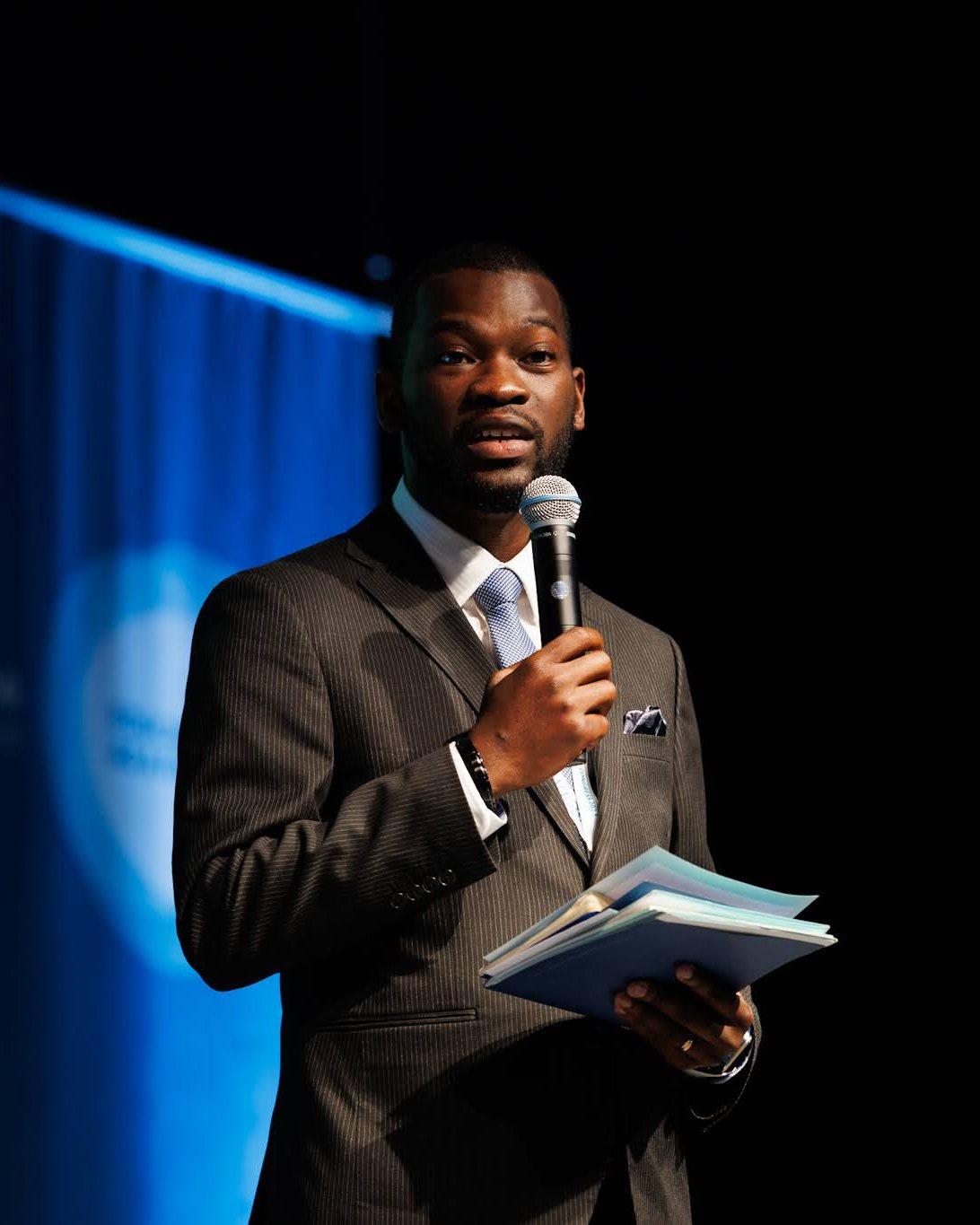
The UWC International Congress is a six-yearly gathering of the entire UWC movement - students, alumni, educators, governance members, donors, and partners. I had been designing and building toward this moment since arriving at UWC. The Congress brought together more than a thousand participants in Thailand and online for three days of keynotes, workshops, and breakout sessions. We heard from Indonesia's Minister of Education, Nadiem Makarim (himself a UWC alumnus) who described how his UWC education was informing his work transforming one of the world's most complex education systems. We heard from Professor Jeffrey Sachs and a panel that included Sue Rivera, President of Macalester College; Nicole Bien, Chief Schools Officer of the International Baccalaureate; and Lutfey Siddiqi, later Special Envoy for Muhammad Yunus in the interim government of Bangladesh. More than 150 facilitators and presenters contributed to over a hundred workshops and breakout sessions throughout the Congress.
When the Congress was over, the next challenge was how to put it all back together, neatly.
Developing the Theory of Impact
The first intellectual priority after the Congress was to articulate UWC's Theory of Impact. I wanted something that was both honest about what UWC does and aspirational about what it can become.
We defined it as follows:
“Young people with great potential and promise from diverse backgrounds around the world are brought together in intentionally designed communities to live, learn, and serve together. By doing so, they gain better understanding, empathy, and compassion for their peers. They are supported individually and collectively to develop the dispositions, knowledge, skills, competencies, networks, and sense of agency to live purposefully and make a tangible difference in the world, thereby building a more peaceful, sustainable, and just future. UWC makes this possible through educational programmes at its 18 schools and colleges, multiple short courses, and national committees operating in over 157 countries and territories.”
Within the Theory, we identified three operational phases: Seek: deliberately finding young people from diverse backgrounds who demonstrate great potential and promise; Educate: offering unique educational experiences that develop the dispositions and sense of agency to take action for peace and a sustainable future; and Connect: fostering lifelong connections to the UWC mission and to each other, enabling the community to pursue transformational opportunities. These three phases, when combined, produce individual and collective impact.
The strategy itself
With the Theory of Impact as foundation, the strategy followed with greater clarity. I retained two pillars from the previous strategy, Seek and Educate, but I decided to split the third pillar, Inspire, into two new pillars: Connect: to strengthen existing connections and activate the latent potential of the UWC movement as an educational force, and Amplify: to collaboratively expand UWC's educational reach and influence through innovative programmes, partnerships, and thought leadership.
The four pillars: Seek, Educate, Connect, Amplify were supported by five cross-cutting enablers: financial capital, human capital and partnerships, communications and marketing, collaborative leadership and effective governance, and technology, tools, and platforms.
One further departure from the previous strategy: the last strategy had been named UWC 2018 & Beyond. By 2021, we were still referencing a strategy named after a baseline year that was long gone. In its place, the UWC 2030 Strategy announced a destination. The strategy cycle was also aligned with the six-yearly Congress, so that every future Congress would serve both a reflective and a forward-planning purpose. These were subtle changes, but they signalled something important about orientation and intent.
The final strategy document was co-created and edited on Google Docs, with more than fifty members of the International Council simultaneously contributing. Everyone could see the strategy being written. The result was a document that the movement could genuinely claim as its own.
young people a year to experience a UWC education by 2030, the strategy’s central commitment
IV.Key Results and Insights
What was produced
The UWC 2030 Strategy was approved by the UWC International Board in June 2024 meeting. Some of the specific commitments it established include:
- USD 300M
- the target for growing the UWC Endowment, with a long-term target of USD 2 billion, to guarantee needs-based financial support for future generations of students
- 15,000+
- young people annually, by 2030, experiencing a transformational, values-oriented, future-focused, and wellbeing-centred UWC education
- 44+
- short courses annually, expanded from 22, reaching a thousand or more participants per year
- 30
- formally recognised UWC city hubs, connecting alumni in key cities to the global movement
- 4
- under-represented regions for new UWC schools and colleges — Latin America, Africa, the Middle East, and the Pacific — where the need is greatest and the reach is weakest
- 2
- three-year action plans: the first for 2025–2027, followed by a second for 2028–2030
What I learned
The most important intellectual outcome of this process was the confirmation of something I had always believed: you cannot lead a system toward impact if you cannot first articulate, precisely and compellingly, how that impact happens.
The second insight is about the relationship between consultation and leadership. Consultation is not the same as consensus-seeking, and it is not about producing the common denominator of stakeholders’ ambitions. The role of the leader is to synthesise the voices of many into a direction that is coherent, ambitious, and honest about the trade-offs involved. People want to be heard; they do not always want to be in charge of the outcome.
The third insight is about narrative. One of my most important early decisions I made was to stop describing UWC as complex and to start describing it as intricate. This was not merely semantic; I noticed that when people described UWC as complex, they almost immediately stopped trying to understand the system and instead used complexity as a reason to defer change. Intricate implies a system that demands patient, careful understanding; one that yields its logic to those willing to look closely.
V.Challenges Faced
Leading from the centre of a movement that does not really have a centre.
UWC International is not a traditional headquarters for the UWC movement. It is the connective tissue of a network of largely autonomous organisations. My authority as Executive Director is, in the most technical sense, limited. I cannot instruct the head of a UWC school to change their curriculum, or compel a national committee to adopt a new selection process. What I can do is inspire, convene, build trust, and create the conditions under which the movement would choose to move together. Learning to lead this way, with the mindset of an owner but the heart of a steward, is the central discipline of the role.
Arriving into a movement that had experienced significant pain.
There was the governance restructuring, the disruptions of COVID, the questions raised by the Harvard study, the infighting between schools and national committees, the mental health crisis in the schools and so much more. These were not abstract challenges; they were felt acutely by real people who had dedicated years of their lives to UWC. I was the new person. Building the credibility and trust required to lead the movement in a new direction, from that starting position, required patience, consistency, and a genuine willingness to be changed by what I heard.
Making the Harvard study count.
The five-year longitudinal study from Harvard was both an asset and a provocation. It confirmed much of what UWC believed about itself. It also raised difficult questions that many in the movement found uncomfortable. Using the study constructively: honouring its findings, taking its challenges seriously, and translating both into strategic direction, without allowing it to become either a celebratory banner or a source of institutional defensiveness, required careful navigation.
The tension between inclusion and coherence.
The more people are involved in developing a strategy, the more the risk that the strategy becomes an inoffensive synthesis of everyone's preferences rather than a genuine document of choices. I was committed to deep consultation, but I was equally committed to producing a strategy that was genuinely strategic - one that said no to things as clearly as it said yes to things. Holding both commitments simultaneously, across two years of engagement with thousands of stakeholders, was one of the hardest aspects of the work.
Reframing the movement's relationship with its own narrative.
UWC has a 60-year story of extraordinary impact. It also has, in parts, a tendency toward institutional nostalgia - a temptation to measure the present against an idealised past rather than against the demands of the future. One of my most important tasks was to help the movement honour what it had been while being genuinely honest about what it needed to become. That is not a comfortable conversation. It is, however, a necessary one.
Closing note
The UWC 2030 Strategy is a document, but what it represents is a movement: 175 organisations, 90,000+ alumni, millions of people touched by a mission that was first articulated in a castle on the cliffs of South Wales in 1962, recommitting to its own highest purpose.
One of the most striking questions I encountered during the strategy development process came from a very senior voice in the movement, early in my tenure: "Where is UWC going? What changes will we make? How will we become a leading voice again in the world of international education?"
That question carried within it both a diagnosis and a challenge. The diagnosis: that UWC had been drifting in relation to its own ambition. The challenge: that the person entrusted with leading it from the centre had a responsibility to answer it, clearly, convincingly, and in a way that the entire movement could own.
The UWC 2030 Strategy is my answer. It belongs, now, to the movement.
The work continues.